


Podcast: Play in new window | Download
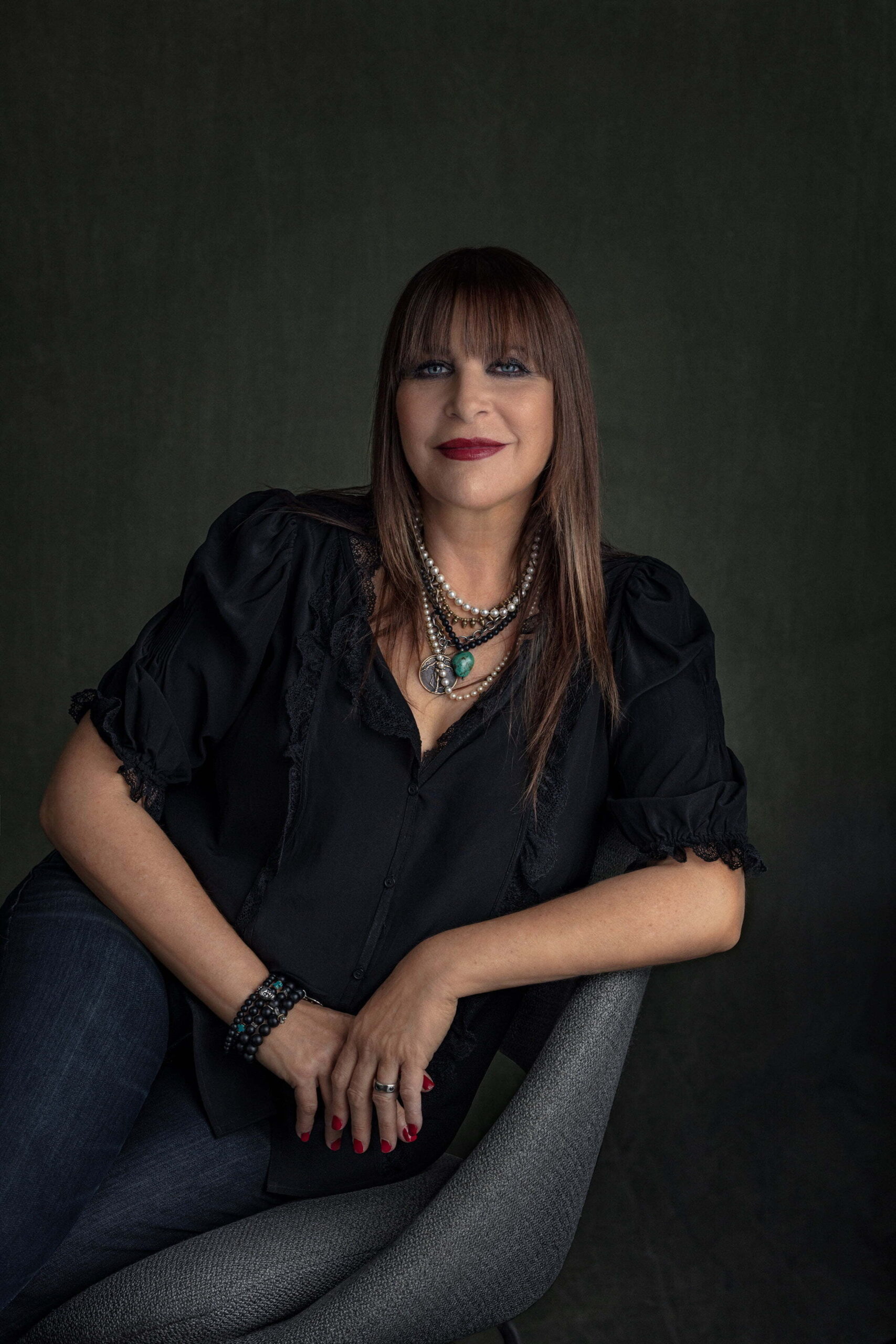
People rarely make decisions based on facts alone—they make them based on how those facts make them feel. Lawyer and persuasive communication expert Jennifer Gardner explains why storytelling is one of the most powerful tools in marketing. Drawing on neuroscience and decades in the courtroom, she shares practical ways to build trust, connect emotionally, and communicate more like a human and less like AI.
Why Storytelling is More Persuasive than Facts
For years I’ve told clients and audiences that stories beat numbers when you’re trying to persuade someone to take an action. Turns out I was underselling it. According to trial lawyer and persuasive communication expert Jennifer Gardner, human brains make decisions primarily based on feelings, not facts, and stories are one of the few tools reliably capable of triggering that emotional response. Facts and features might justify a decision after the fact. They rarely cause it.
Jennifer has spent three decades trying cases in Los Angeles courtrooms, and she’s also an administrative law judge and the founder of The Edge Education, where she teaches executives the persuasive communication skills nobody covers in business school. She didn’t start out as a storytelling expert. She started out as a lawyer with zero trial training who got thrown into courtrooms because her clients refused to settle. Storytelling was the only tool she had. It’s also the one that won her cases.
That background matters, because it means everything she’s learned about persuasion has been stress tested in front of twelve strangers who owe her nothing. If it works on Twelve Angry Men (or Women), it’ll work on your prospect list.
The Brain on Story
You’ve probably heard the old right brain, left brain framing: logic on one side, emotion on the other. Jennifer says that’s outdated. The real picture involves complex neural networks running throughout the brain, and when those networks fire together, people become more inclined to make a decision.
She also shared there’s research showing that when a storyteller feels a certain emotion while telling a story, the same regions of their brain light up in the brains of their listeners. Actors train for this. It’s why you can sit in a theater and feel the drama, the pain, the joy the actor is projecting, even though nothing happening on stage affects you directly.
Marketers need that same intentionality. If you’re dialing in a testimonial video or phoning in a webinar because you’re tired and it’s Tuesday, your audience will feel that too, whether or not they could name what’s missing. You can’t fake conviction and expect it to transfer. You have to believe what you’re saying while you’re saying it, and then your audience’s brain does a version of the same thing yours is doing.
Show Me Your Flaws
Here’s where it gets interesting for anyone in marketing who’s been trained to lead with the pitch. Jennifer talked about “finding the flaw,” identifying a weakness in yourself, your client, or your product, and exposing it upfront as a way of building trust.
Her example was the old Volkswagen “Lemon” ad, the one where the headline calls the car a lemon because a nearly invisible flaw didn’t meet the company’s own standards. That ad has been studied in marketing classes for decades, and it still works because it does the opposite of what every instinct tells you to do when you’re selling something.
Jennifer uses this in her own workshops. She talks openly about a flaw she still struggles with, and how the service she offers helps her manage it. That’s not a confession for its own sake. It’s a trust shortcut. Nobody believes a pitch with no weaknesses, because everybody knows nothing is truly perfect. When you name the flaw before your audience finds it themselves, you’re doing two things at once: you’re humanizing yourself, and you’re taking the ammunition away from anyone arguing the other side.
This works because it signals confidence. Only someone who feels secure about the whole picture is willing to point at the imperfect part of it.
The Overexplaining Trap
This next one stung a little, because I’m guilty of it myself. Jennifer calls it “the big nose,” being overly technical, overly logical, and overly detailed as a substitute for genuine credibility. It doesn’t work, and here’s why: our brains are increasingly bad at processing large amounts of information. Social media has trained us to be distracted, and when you overload someone with detail, they don’t get more convinced. They get overwhelmed, and overwhelmed brains disconnect entirely.
That doesn’t mean details don’t matter. They do, and they help establish authority and trust in their own right. The trick is balance: enough detail to build credibility, wrapped in enough humanity to build connection. Too many marketers lean hard on the data because it feels safer than being honest and specific about a real experience.
What Great Storytellers Do Differently
Jennifer’s list of techniques used by great storytellers includes: eye contact, slowing down, using silence deliberately, mirroring body language, and speaking in the actual language of your audience. Not your industry’s language. Theirs.
She picks juries in seconds, working only from basic demographics and a short round of questioning, and figures out how to speak their language almost immediately. Part of how she does it: she repeats back the exact words people use. That shows she’s listening, and listening, she says, might be the most important skill in the entire toolkit.
If you’re building buyer personas, this is worth sitting with. It’s not enough to know your audience’s job title and pain points. You need their actual vocabulary, the words they’d use in a text to a friend, not the words in your own product one-pager.
Where AI Fits (and Where It Doesn’t)
We talked about AI, because you can’t have a conversation about content these days without it coming up. Jennifer uses it, and she’s good at prompting it. Her verdict (no pun intended): what comes back is never as good as what she’d produce herself, because AI has never lived her life. It doesn’t know her story the way she knows her story.
She’s also worried about “AI slop” making us cognitively lazy, eroding our ability to tap into our own emotions and creativity to build something that genuinely resonates. I use AI constantly in my own work too, but I’ve built a wall between what AI produces and what I publish. I use it to build out a first draft or a framework, then I do the part it can’t do: bring my own experience to it.
One Step This Week
When I asked her for a single starting point she didn’t give me a framework or a checklist. It was this: check in with yourself, and think about a moment in your own life when you felt something close to what your customer is feeling right now. Find that memory, and let it inform how you talk to them.
That’s it. Not a content calendar. Not a hero’s journey template. Just genuine empathy, translated into language your audience already uses.
So here’s your assignment. Before you write your next piece of content, whether it’s an email, a landing page, or a script for a video, stop and name one flaw you’d normally hide. Then find one moment from your own life that mirrors what your customer is going through right now. Write from there. See what happens to your response rate.
Transcript From Jennifer’s Episode
Rich: My next guest is a Los Angeles-based trial lawyer, persuasive communication speaker, and administrative law judge for the County of Los Angeles. She’s operated her own litigation firm for three decades, handling complex business and real estate matters through trial, beginning her career in the entertainment industry.
She holds certifications from the Wharton School at the University of Pennsylvania in executive leadership, influence and persuasion, and understanding the brain using neuroscience to deliver better business results. At conferences, events, and podcasts, she educates high-performing leaders on the persuasive communication skills they never taught in school, skills grounded in cutting-edge brain research that amplify the irreplaceable human qualities AI cannot replicate, at least not yet.
She offers courses, workshops, and private trainings through her company, The Edge Education. Today, we’re going to dive into how you can tell better stories with Jennifer Gardner. Jennifer, welcome to the podcast.
Jennifer: Thank you. Thanks for having me.
Rich: So what led you to focus on, of all things, storytelling, especially coming from a legal background where facts and logic seem to dominate?
Jennifer: I love the way you just asked that question. It’s really a perfect segue into the answer, actually. Because when I started, I had no training in how to try a case, because I left the law firm environment in order to start my own firm pretty much right away. And I realized really quickly when I started getting all these cases with clients who wanted their trials, their day in court, come hell or high water, no matter what. I mean, settlement offers would be made to them that were literally everything they had been asking for on Tuesday, and on Friday they decide to reject it and they say, “Nope, we’re starting trial on Monday,” just over a matter of principle, which put incredible pressure on me, of course.
And then I got into these courtrooms and I realized, “Oh, my goodness, what do I do? What do I do?” And the only thing that I knew how to do was to tell a story. That was the only thing I knew how to do. Because I’d been telling stories, my mother will say, since I could talk.
Actually, before I could talk, I was reciting verbatim Walt Disney stories like Peter Pan and Bambi. Those were my favorites. So I’d listen to the records, I studied the stories, and then I would speak that before I could form complete sentences. So you could say I was programmed with storytelling, and storytelling is what helped me win my cases.
Rich: All right. So when we think about marketing, many of us also lean heavily on facts and features and proof. Why do you feel that storytelling often outperforms these approaches?
Jennifer: It’s not just what I think, it’s what the science shows. Which I’ve spent a lot of time really diving into so that I could make sure that I’m not just winging it when I go to court, so that I’m nailing it.
And the science shows that our human brains decide primarily based on feelings, how we’re feeling and what our emotion is. And stories trigger feelings and emotions. And it’s when those parts of the brain are firing when you’re listening to a story, it moves you to make the decision that’s usually compatible with what the storyteller is wanting you to decide, if you’re good at it, if you know how to do it.
Rich: So you kind of teased this up. You’ve studied the neuroscience behind storytelling. So what’s happening in our brains when we hear a story that makes it so powerful and resonate with us?
Jennifer: Well, there are neural networks that run throughout the brain that fire when we’re feeling emotions and that have been linked to the decision-making process and the decision that’s ultimately made.
And it used to be we used to say right brain, left brain, right? The left brain was the more linear brain, and the right brain was the emotional brain. But it turns out that these are complex neural networks that run throughout the brain, and when they are firing, the brain is more inclined to make a decision.
So there’s one really important point that I’m leaving out here, which is that there’s been really important research, which I find incredibly exciting, that shows that when the storyteller is feeling certain emotions in themselves as they’re telling a story, the same parts of their brains that are lighting up are lighting up in the brains of the listeners.
So it requires this whole new level of intentionality when we’re presenting, when we’re speaking, when we’re trying cases, when we’re creating video for marketing materials, whatever it is, in order to ensure that we are really connected with ourselves and really intentional with the emotion that we want to evoke in other people.
And this is something that actors do naturally. They do it all the time, right? They’re trained to do that. And that’s why you can go into a theater, and you can feel what the actors are feeling. You can feel the drama, you can feel the pain, the joy. It’s the same thing that we need to do as marketers and as lawyers and as presenters and as business communicators.
Rich: So if we’re creating a video to show off why our solution is the best, what I’m hearing from you is we can’t just dial it in. We actually have to believe this, and we have to kind of get our emotional state a little bit higher to be able to transfer, because other people are mirroring what they’re seeing in our own behavior.
Jennifer: Yes, you got it. That’s what we need to do.
Rich: And it’s interesting, because obviously in marketing on some level, whether you have a scarcity mindset or you have a plentiful mindset, there is a certain amount of competition that goes on in any industry. You’re seeing it in a very refined space. You have to tell a better story than the person across the aisle from you when you go into the courtrooms.
What are some of the things that you think about when you’re trying to tell a story that resonates with 12 jurors, that’s going to resonate more than the person who’s taking the other side of the argument?
Jennifer: Well, I love that question. I think a lot about a personal experience that I can relate to how I felt, that’s similar to the situation that my client or my witness is in right now. And I think about it in universal terms.
So I’m looking at what is something that’s similar that many other people have experienced, and how can I spin that in the terms of the case? So how can I frame the story of the case so that people will start to relate to it themselves, on an emotional level, in their own lives, so that they get sort of emotionally anchored into the emotional landscape of the matter that I’m handling, at least from my client’s perspective
Rich: From a marketing standpoint, it’s almost like we have to understand and be able to replicate the pain points of our audience that we’re trying to reach, and be in the space that they are, this state of confusion or uncertainty or having a problem, and kind of make that connection with them, is what I’m hearing from you. So that we can spin that story, tell that story, and hopefully convince them that our story has merit and they should follow our path, and perhaps do what we hope they will do.
Jennifer: Yeah, exactly. You mentioned the word ‘pain points’. There’s a universality of human experience. We’re all basically having similar experiences and experiencing similar emotions, and telling stories to ourselves to make sense out of our reality and what happened to us in the past. This is a basic. it’s documented in the science, in all the research, and it’s a basic function of the human brain. It’s sort of how humans make sense of our worlds and our realities. And so what I try to do is find the universal thread. And yes, it’s pain point. It’s absolutely pain point.
Another one that I think is really great for establishing credibility, especially in my field, is finding the flaw. Where is the weakness? And exposing that up front as a way of building trust. I don’t see a lot of that in marketing materials. I don’t know exactly how marketers would address that, except when they’re telling a story about themselves in order to pitch a product, as to why they like the product or the service, for example. But the flaw is really a great way for people to relate to you and for you to build rapport.
Rich: So would this flaw be something in ourselves, or could it also be something in our product or offering? Because I’m thinking if that’s one way to build trust, you go back to that old Volkswagen ad where they said they had the word ‘lemon’ across the top of it. And what they were saying is, they are such perfectionists that this car that looks totally fine to them is unacceptable.
Or sometimes we’ll talk about a negative side of our product in a way of kind of highlighting how it’s strong in other areas or something like that. Could that be one of the ways that we might identify and bring forth a flaw that could then propel our storytelling?
Jennifer: Yeah, I think so. I absolutely think that that’s a great way. I love that Volkswagen ad. I love to study old ads for this reason, and I think flaw is just a really great way, and it’s not necessarily flaw so much as it is weakness.
For example, if I admit a weakness in my case, or if I admit a weakness in a story that I’m telling in support of a service that I’m selling – which I do all the time in connection with my workshops – I’m talking about the transformation. I’m talking about how I had this flaw, or how I may still have this flaw and I struggle with it, and how the service helps me overcome it.
Rich: And are you talking about this flaw because you are humanizing yourself in a way so that I can identify with you? Or is it also to take maybe some of the argument away from the person who you’re arguing against?
Jennifer: I think it’s both. It’s primarily humanizing myself, or in a courtroom, my client. That’s a huge way that I score points with jurors and with judges. I’m the first one to admit when I make a mistake, when I don’t understand something, when I think I might be wrong. That makes me more human to them. It makes me bond with them, or they bond with me, and connect with me on emotional level.
I think it’s the ultimate way of building trust and building rapport and being likable. Because nobody’s perfect, and we all know that about ourselves. Everybody has self-doubt, and self-criticism, and embarrassment, and humiliation, and shame, that they’ve experienced in their lives. And when you highlight that, it can really be an incredible inroad to building trust and building rapport and closing the client in my case.
Because I get a lot of phone calls from people, and I do this a lot. I’m very humble on my phone calls. I’m not arrogant. I don’t pretend to know it all, because I know I don’t. And so that helps build a relationship, and it gives me a lot of leeway to not be so perfect and not have to be so perfect. And that’s real, and that’s human.
Rich: Yeah. Interesting. It reminds me of two things. One, me telling my daughter that if she ever trips and falls in the hallway, to get up and make fun of herself first before anybody else gets the chance, because it takes all the wind out of their sails.
And/or the final scene in 8 Mile with the rap battle, and in the final battle Eminem spends his half of his rap making fun of himself, taking all the ammunition away from the person he was going up to battle against, and basically won that way. Oh, I hope that wasn’t a spoiler for anybody who hasn’t seen 8 Mile, but it’s 20 years old at this point. Well, you know, Darth Vader was Luke’s dad, too, on top of that. No, I’m just kidding.
Jennifer: Right? Well, humor is the thing. Like comics. This is something that I really want to go deeper into in the future, is why and how comedy works, but I think it has a lot to do with what you’re describing right there.
Rich: All right. You’ve said that stories, storytelling as a skill might actually be overrated compared to understanding why it works. Can you unpack that?
Jennifer: I think that it really comes down to the emotions and tapping into the emotions, and the presence of the storyteller, and the highlighting of certain features in the character more so than story arc.
I’m not meaning to denigrate Joseph Campbell’s brilliant work, but we can look anywhere on the internet about what is the hero’s journey? How do we tell a good story? I don’t really think it’s the elements of the narrative itself that carries the day. I think it’s the psychological and intellectual honesty and the emotional honesty that we bring to all of our communications that are what’s going to carry the day.
And so I like to focus with my clients and my workshops and on myself on the human experience of being the person in the situation where you need to either sell something or you need to, whether it’s an idea or a product or a service or your innocence. Your innocence.
People are coming at you usually claiming that you did something really, really wrong in the legal profession, and you have to take accountability, be responsible, explain it, even in a criminal case is my theory. But you have to explain it, and then you have to basically throw yourselves at the mercy of the jury by showing your humanity. The story arc itself isn’t as important as your emotional honesty every step of the way in that process.
Rich: All right. So show our flaws, understand our pain points, make that human connection with our audience. One of the things that I sometimes see when people are selling or people are marketing is that, and I’m guilty of this too, sometimes we over-explain or we overload people with information because we want to make sure that they have everything they need to make a decision. What’s, in your opinion, the downside of relying too much on data and logic when we’re trying to win somebody over?
Jennifer: I call them the “big no’s”. Over-explaining, being over-technical, being overly logical. Our brains are increasingly unable to focus, unable to process and handle large amounts of information. We’re very distracted, and social media is reinforcing these bad habits or these ways that we function as humans more and more these days. And people are overwhelmed and overloaded with information all day long, every day.
And so one of the things that you want to do is not overly explain. Because a lot of people will fall back on being overly logical and overly detailed and overly technical as a way of building credibility. But that doesn’t necessarily build connection, and you need to have both.
So I like to focus on not just the details, but the humanity of whatever it is you’re trying to explain or you’re trying to convey or you’re trying to offer and the emotional relationship and the rapport that you’re building with the people that you’re speaking to or communicating with or writing to.
Rich: Jennifer, I’ve often listened to somebody tell me a story, and the story itself is not very interesting or compelling or world-changing, but they have my complete attention. And then I’ve listened to other people who have this really important life-changing story to tell, and I can barely keep my eyes open.
What is it that makes the difference not in the story, but in the storytelling? What are some of the techniques that great storytellers employ and that mediocre ones don’t really understand or don’t use?
Jennifer: Okay, great question. They know how to build rapport, they know how to connect with the audience, and they do that by certain things. By making eye contact, by slowing down, by leveraging the power of silence, by tapping into the emotion that they’re feeling in relation to what they’re talking about, by mirroring some of the body language, and most importantly, by speaking in the language of their audience, speaking in the language of the people that they’re trying to influence or persuade or whose decision they’re trying to influence.
Rich: And obviously, when you’re saying in the language, you’re not talking about English, Spanish, French. You’re talking about the words that they may use in their lives or in their industry.
What are some of the techniques that you use to figure out what those words are? Because I assume when you go into the courtroom, you haven’t had time to sit down and talk to each one of those 12 jurors as well as the judge and understand what language they may use, but yet you’re immediately forced to communicate and build rapport with those strangers.
Jennifer: Yes, and this is what makes that work really exciting. Really, really exciting because it requires that we slow down and use parts of ourselves and our emotional intelligence that we may not use in everyday conversation. Although I do, because I’m practicing it all the time, because that’s exactly the situation that I find myself in.
When you are a lawyer, you get a chance to pick your jurors, and so you get a chance to interview them within these legal constraints, ask them questions about some sense of justice that they may have, or a feeling or an experience that they might have had that’s similar to what’s happened in your case. This gives you an opportunity.
But I also know my community. I know who my people are. I’ve been here my whole life, and I have a feeling for who they are, where they live, where they come from. Of course, we ask questions up front. We poll them. We study, we get basic demographic information about are they married? Are they employed? What do they do? Are they educated? These kinds of things. Very similar to what a marketer does, right? They want to know what the demographics are of their audience or of their customer base so that they can tailor the advertisement to them to make those people want to buy the product or want to embrace the idea, in my case.
And so then, once I know who they are, I have an ability to be able to speak to them in a way that’s using language that they use. And a very specific way that you can do that is repeat the actual words that they use. Repeat it back. That shows you’re listening, and listening is so important. It’s the most important skill, I think. Actually really listening, showing that you’re listening, showing that you’re taking it in. And then when you respond, incorporating some of that language back in your actual response. The language of the audience is the most important thing. So of course, when I’m speaking to a juror or I’m speaking to a judge, I’m going to speak in different way.
The judge is going to want more technical, more legalistic language. When I’m speaking to a juror, or when I’m trying my case, I’m using much more informal colloquial language. I want them to understand it, and I want them to see that I’m just like them, whether I am or not. And I think essentially we’re all alike because the human experience is universal.
Rich: You’ve touched on a few of these already in our conversation: building rapport, listening, mirroring language. What other specific traits or habits can we work on, can we develop, that will make us better, more engaging storytellers over time?
Jennifer: Oh, that is such a good question. Let me think about that. I really think the answer lies in our ability to make the time to be in touch with ourselves and our own human experience. The more that we can slow down, and I know it’s hard, I have to make the time to slow down.
Like this morning, early this morning, the weather was gorgeous here in LA, and I sat in my garden, and I drank my coffee with my dog just to get my feet on the ground and to say to myself, “Okay, how are you doing? What’s going through your mind? What’s happening in your life right now?” But really, that’s foundational. Being in touch with ourselves and what we’re experiencing and what we’re processing and our own experience of being human is fundamental. Because if we can’t connect with ourselves, there’s no way that we can understand or empathize with what someone else might be feeling, what their pain might be, what their struggle might be, what their desires are, what their aspirations are. And all of that is so important, especially in marketing, as you know.
Rich: So we start working on these things. How do we start incorporating these techniques of storytelling into the kinds of content that we create every day? You know, whether it’s web pages, emails, social media, how does that translate from what we’ve talked about into actual doing of our jobs?
Jennifer: First let me just say that for me, and I’m a smart person, I’m not a genius. I’ve been told I wasn’t a genius when I was very young, so I get it. I’m not a genius. I’m a smart person. I have to review these ideas constantly to keep them fresh in my mind. So it helps to have a cheat sheet of the ideas that you can use, sort of like a tool chest.
You use one, you take it out of the chest, like a Phillips or a slotted screwdriver, depending on what the job requires, right? So I do that a lot with these ideas, and I throw the spaghetti at the wall and get a feeling for what’s sticking. And I’m really quick at adjusting and taking the feedback and adjusting my sails in order to get to where it is that I ultimately want to go.
So I think part of it is practice, but mostly it’s awareness. Being aware of what it is you can do. And practice is so important. I can practice these ideas in a supermarket with the clerk. I’m super skilled at building rapport with people who are usually emotionless and expressionless and busy, focused, head down during their job, waiting for their next break, just want to finish their shift, go home, and do what other chores and things they need to do when they finally get home.
I’m really good, and I’m practicing all the time with speaking to people who are complete total strangers, trying to form a connection with them. And that has an effect on my experience of being a human, my experience being comfortable with real people in an everyday situation. And I would say that’s the biggest thing that we can do.
I don’t care what kind of an idea you’re selling or who you’re selling it to, the bottom line is you need to understand how to connect with the person whose decision you’re trying to impact, and there’s no better way than to go out into the world and talk to humans, and try to find some way to relate to them over whatever it is that they may be experiencing, for however brief that moment might be.
Rich: So quick side quest. When you’re faced with that stone-faced cashier at the checkout counter, do you have a go-to icebreaker? Because I think for many of us, we think our audience is so busy and so overwhelmed and in the middle of a doom scroll that we can’t break through. So I’m curious to hear if you have any go-tos for getting somebody to stop their IRL doom scroll and engage with you?
Jennifer: Yeah. It’s, “Hey, how are you doing today?” How’s it going?”
Rich: That’s all it takes.
Jennifer: That’s what I do. I will tell you, there’s one 7-Eleven, I don’t know if you have 7-Elevens on the East Coast, but we have them here. So there’s this one 7-Eleven near a place that I go to once, twice a week for many, many years now, and the same cashier is in there. And I often wonder, even though I go there once or twice a week constantly for many, many years now, does he know who I am? Because he is so stone-faced. He’s almost impenetrable. He’s so difficult to break through, but I always do. And then I realize as I watch him, he’s watching the cash register. He’s watching the people that are coming in and out. He’s watching is somebody stealing from him, what kind of crime is happening in the back. Who’s ruining the soda machine??
And so I will say something to him like, “Hey, how’s it going today? Is it going well?” And he occasionally will go, “Yeah,” eyes darting all around, like he’s distracted by necessity. His job requires that he’s holding it down. So I do find it challenging in certain situations, but when you have a captive audience, it’s a little bit easier. This guy, his attention is distracted. It’s very difficult to captivate someone in that situation who in real life is handling all those things, but it can be done. I think he knows who I am now. He always says, “Hello. I’m good.”
Rich: So I’m sure some people who are listening are like, “This all sounds great, but I still have to explain what my product or service does. There’s still key information I need to communicate.” How do you balance the storytelling with the details that you feel the other person needs to make an informed decision?
Jennifer: You answer the question with a question. You balance it, right? You balance it. It’s not just one thing. It’s not just logic. It’s not just technical details. It’s not just facts. It’s everything. It’s appealing to the emotions. It’s being grounded in the emotion as you’re explaining it, and it’s the details. Because the details are necessary to build trust, too, and to establish credibility and authority, 100%. So it’s balance.
I have clients who want to overwhelm me with all these technical details about whatever their story is, whatever their problem is, and I’m like, “Whoa, whoa, whoa, whoa, wait. We have to hit the highlights.” Because if you overload them, people are going to go into a cognitive freeze, and they’re going to tune everything out. They’re going to disassociate, disconnect, and you’ll never get to where you want to go. You’ll never get the result or the decision that you want.
Rich: All right. We live in a very AI-centric universe it feels right now. AI is everywhere, and AI-generated content is seemingly everywhere, too. How can we use storytelling to help us stand out and feel more human when so many people are relying on AI to get their message out there?
Jennifer: Okay, so I play with AI too, of course, right? I think it’s fun, but that’s about it. It’s kind of scary in some ways, even though I think it’s very powerful. What’s really scary is when we stop doing the inner human work. I have often asked AI, “Hey, can you create a social media post?”
Like, I listen to podcasts where they will teach you how to do a really good prompt, right? And so I’m really good at prompting, and what I get back is never as good as what I would get back if I did it myself. So what I’ll do is I will put in the raw ingredients. I’ll get back the feedback, and then I never publish it or post it right away because while it sounds really good on the surface, when you really go beneath into the details, it’s not. It’s nowhere near the authentic type of a message that I want to create. So I think it’s really important to slow down and recognize that.
AI slop, as I’m hearing it referred to more and more this week, is everywhere and it’s really, really dangerous, and it is, furthermore eroding our ability to use our own mental processes to be creative, to tap into our emotions so that we can create a message that’s really going to resonate with people. And, yeah, those are the two big things. It’s really making us cognitively lazy, and we can’t let that happen. We can’t let that happen.
Rich: I also use AI pretty much constantly in my work, and I find that I have erected a wall between using the AI and what the final product is. Not because I can’t automate it and get it there, and not because I haven’t trained it to sound like me, but it has not had my life experiences. It does not know my story the way that I know my story.
But it is really good at finding patterns and finding gaps. So I find that having it build out an argument or a framework or something like that, and giving me a draft of something which then I use to create something that I find to be much more valuable, has been effective use for me.
And also, I am a strong believer in use AI to empower your employees, not to replace them. So I totally agree with you. But I’m always curious to hear other experts and how they’re using AI and how they see it impacting their own work and the work around them.
Jennifer: Well, in the legal profession, there’s this huge race to get us to sign up for all kinds of software that can do all kinds of fancy things and save time. But ultimately, there’s no replacement for really understanding exactly, for example, if you’re a lawyer, what your evidence says, what’s going on in there.
Yeah, it’s a useful tool, but it absolutely can amplify human effort. It can save you a little bit of time and energy, but it’s not a substitute.
Rich: If we wanted to take one step this week to become better storytellers in our marketing, in our lives, what’s that first step you would recommend?
Jennifer: Just one.
Rich: One step to get us started. I don’t want to overwhelm people. I want them to take one step rather than not take three steps.
Jennifer: Sure. Well, this is a big step, but I think it’s a really important one. And that is to always check in with yourself and see what would your own experience be if you were suffering from the pain point that your customer, your audience is suffering from? And then think about an event or a story from your own life that you could tell to relate this emotion to the emotion that your market or your audience or your listener or your viewer or your reader might have and really tune into that so that you can speak to that in other people. I would say that is the most important ingredient of being a great storyteller and telling a great story. Empathy.
Rich: Yeah. I really like that. And I also sometimes find myself collecting stories when I’m on the other side of the table as the customer or the client, and how does this person make me feel, or what are my reactions to that? What does it feel like when I have to go into the auto repair shop and I don’t know anything except where the switch is to open up the hood? How does that make me feel?
And so how can I talk to people in a meaningful way about Google Analytics without making them feel stupid or anything else, and just be in a position to help them. So I think that’s a little bit of what you’re saying. You said it a lot more eloquently and succinctly than I did, but those are some of the ways that I think I’m trying to accomplish the same things that you’ve set out.
Jennifer: Yeah. Yeah.
Rich: Awesome. Hey, if people want to learn more about you, Jennifer, where can we send them online?
Jennifer: They can go to my website, which is Jennifer B, as in boy, Gardner.com. They can find me on LinkedIn at Jennifer B. Gardner and on Instagram at I am Jennifer B. Gardner. It’s really simple.
Rich: And on those, is that just your law or is that also the Edge Education that we were talking about in the intro?
Jennifer: The Edge Education is linked to Jennifer B. Gardner, but you can also go to TheEdge.education if you want to find out more information about my programs and my workshops. Jennifer B. Gardner is how you can find out information about me as a speaker and all the work that I do.. And my law firm is jgardnerassociates.com.
Rich: Awesome, and we’ll have all those links in the show notes. Jennifer, thank you so much for your time today.
Jennifer: Thank you.
Show Notes:
Jennifer B. Gardner is a trial attorney and persuasive communication speaker, where she helps leaders, marketers, and professionals become more persuasive through storytelling, neuroscience, and authentic human connection. Explore her training opportunities and connect with her on LinkedIn and Instagram.
Rich Brooks is the President of flyte new media, digital agency offering branding, web design, and digital marketing located in Portland, Maine. He is also the founder of the Agents of Change. He’s passionate about helping small businesses grow online and has put his nearly 30 years of experience into the book, The Lead Machine: The Small Business Guide to Digital Marketing.