



Podcast: Play in new window | Download
Most businesses focus on generating leads – but far fewer have a clear plan for what happens next. CRM consultant, Jason Kramer, shares where leads typically fall through the cracks, why follow-up matters more than most realize, and how even small teams can build a simple, effective process that turns more opportunities into customers.
Your Marketing Gets People to the Door. Your Sales Process Is Leaving Them There.
Here’s something I’ve noticed after years of talking to business owners and marketers: the conversation about lead generation usually ends the moment someone fills out a contact form. We celebrate the click, the form fill, the “lead.” And then we hand it off–or worse, we do nothing–and wonder why the pipeline feels thin.
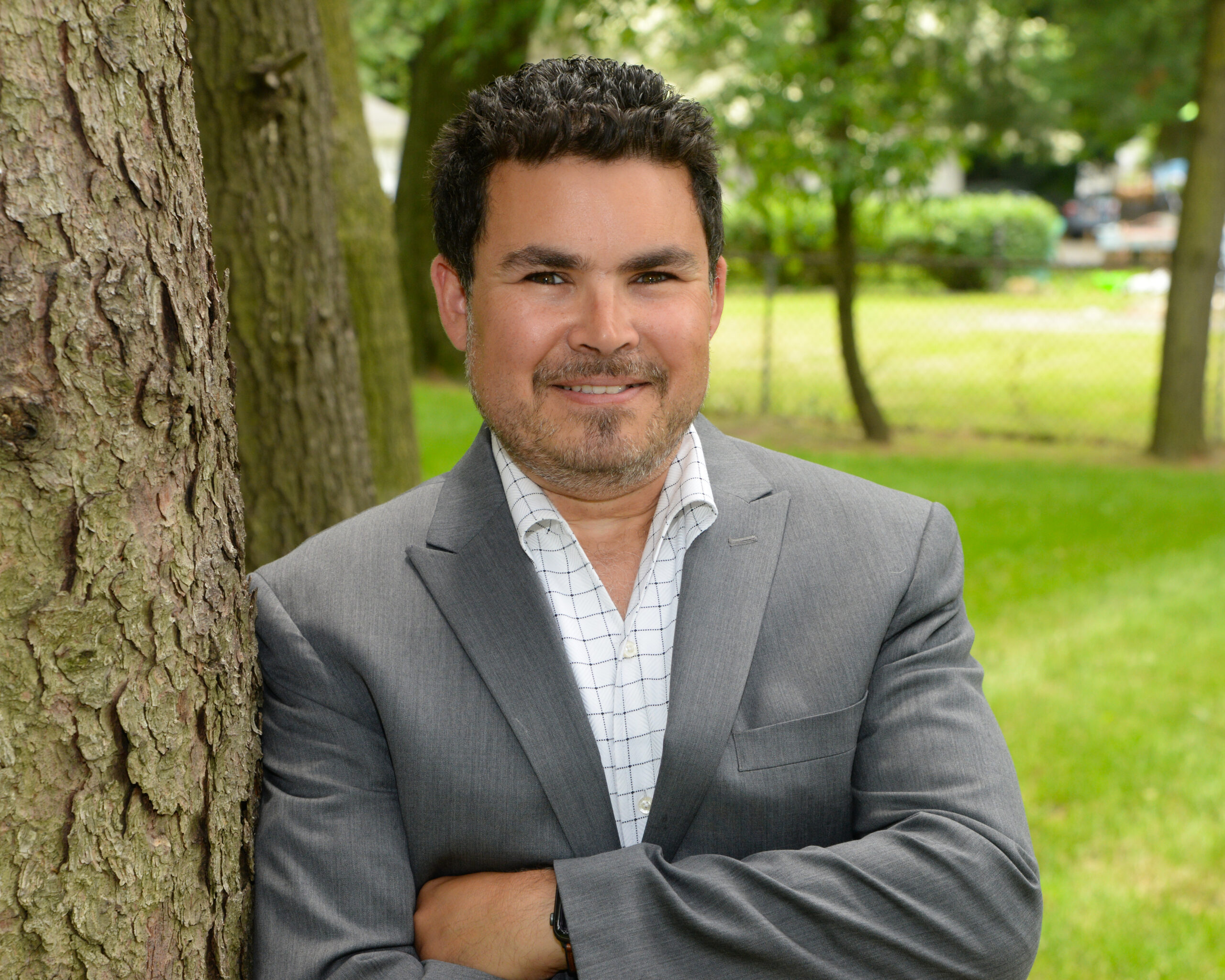
Jason Kramer, founder of Cultivize and a CRM strategist who works with distributors, agencies, and service businesses, has spent years watching deals die not from bad marketing, but from bad follow-up. He joined me on the Agents of Change Podcast to talk about what he calls the “leaky bucket” and where those leaks show up.
You Don’t Have As Many Leads As You Think
One of the first things Jason reframed was the definition of a lead itself. It’s easy to look at a week’s worth of form fills from a paid campaign and feel good about the numbers. But as Jason put it, there’s a big difference between 80 people filling out a form and 80 qualified conversations.
His criteria for a real, qualified lead:
- they have a problem you’ve solved before,
- a genuine pain point that makes solving it a priority (not just a nice-to-have),
- the budget to act, and
- some level of decision-making authority.
Without those four things, you have a contact, not a lead.
That’s not a knock on your marketing, it’s just a reminder that MQLs (marketing qualified leads) and SQLs (sales qualified leads) are different things. Conflating them is how pipelines get inflated and sales teams get demoralized.
The 15-Minute Rule Nobody Follows
Once a real inquiry comes in, the clock starts ticking faster than most businesses realize.
Jason cited industry data suggesting your target response time to a new lead is 15 minutes. That might sound aggressive, but the underlying point is that someone just raised their hand. The longer you wait, the colder they get, and the more likely they are to fill out another company’s form.
If 15 minutes isn’t realistic with your team’s bandwidth, the minimum viable response is an automated confirmation email that sets expectations. Something that says: we got your message, here’s what happens next, and here’s when you’ll hear from a real person. That alone puts you ahead of the contractors and vendors who take days to respond–or never do.
If You Can’t Write It Down, You Don’t Have a Process
Before Jason ever recommends a CRM to a client, he asks them to map their current sales process on paper. Not in software. Not in a slide deck. On paper.
Most can’t do it.
And as he pointed out, if you can’t describe your process, there’s no point in buying software to automate it. A CRM won’t create a process where none exists. It’ll just give you an expensive place to ignore your leads more efficiently.
The exercise he recommends is to take a piece of paper and write down every step that happens from the moment someone fills out your form to the moment they sign a contract. Who gets notified? Who’s responsible for the first call? How do you qualify them? What does your proposal process look like? How many times do you follow up, and how?
If you get stuck anywhere in that exercise, you’ve found your leak.
Where Deals Actually Die
Jason’s take on where most B2B deals fall apart was pretty specific, and it matched my own experience: right after the proposal goes out.
The salesperson sends the quote, waits a few days, then sends a “did you get it?” email. Maybe they follow up once or twice more, and all of them transactional: are you ready to decide? When they don’t hear back, they move on. The assumption becomes “they went with someone else.”
But as Jason pointed out, industry data suggests over 60% of prospects who don’t buy immediately will eventually buy from someone. The question is whether that someone is you.
The follow-up cadence matters, but so does the content of the follow-up. Jason’s advice: lead with education, not pressure. Instead of asking if they’ve reviewed the contract, send them something genuinely useful. An article that’s relevant to their situation. A resource that helps them think through the decision. Something that makes them better informed whether or not they hire you.
He shared a story about a client who won a deal specifically because he was the only vendor who kept sending helpful information throughout the research process. Every competitor was just checking in on the contract. He was building trust. That’s the difference.
The Multi-Channel Follow-Up Nobody Wants to Do
There’s another layer to effective follow-up that Jason raised, and it’s one I’ve had to push my own team on: picking up the phone.
We’ve collectively gotten so comfortable with email that a lot of people, especially anyone who grew up during or after COVID, find phone calls genuinely uncomfortable. But if you’ve sent three emails and heard nothing back, the email isn’t breaking through. Try a different channel.
Jason’s approach is to connect with every prospect on LinkedIn immediately after a conversation, even if nothing comes of it. Not as a sales tactic, but as a long-term visibility play. As he posts content, his name keeps appearing in their feed. By the time they’re ready to make a move, he’s not a stranger–he’s someone they’ve been seeing for months.
That kind of low-pressure, consistent presence is harder to automate than an email drip, but it’s often what tips the scales.
CRMs and Automation: What They Can (and Can’t) Do
Jason is, not surprisingly, a fan of CRMs. But his perspective on them is more practical than evangelical.
The right time to invest in CRM automation is after you’ve defined your process, identified where things break down, and figured out which tasks are burning time they shouldn’t be. He gave a useful benchmark: a salesperson making $150,000 a year who spends two hours a day on administrative work is costing the business close to $40,000 annually in non-selling time. Automation’s job is to reclaim that.
What automation can’t replace is the human connection. Jason was clear that people buy from people. The follow-up emails, the drip sequences, the reminders to call: those are infrastructure. The actual relationship is still built by showing up, being helpful, and having real conversations.
The One Thing to Do This Week
If any of this is landing for you because you’ve got a few prospects you’ve let go quiet, here’s where Jason suggested starting: figure out how long your actual sales cycle is.
From first contact to signed contract, what’s the typical timeline for your business? Three months? Nine months? Longer? Once you know that, you can design a follow-up cadence that maps to it–touch points spaced no more than six to eight weeks apart, each one offering something of value.
Pair that with time blocking. Jason protects two to three hours every day, Monday through Thursday, for sales development work. It doesn’t get bumped. It doesn’t get moved for meetings. If you’re a solo operator or a small team where everyone wears a sales hat, that kind of protected time is the difference between a pipeline that moves and one that stalls.
The leads you’re losing aren’t necessarily lost forever. They’re just waiting for someone to stay in touch.
Transcript from Jason Kramer’s Episode
Rich: My next guest founded Cultivize, a CRM consulting firm, specializing in lead nurturing strategies and technology. With 15 years of experience running a creative agency, he identified revenue gaps in marketing and sales funnels for distributors, service providers, marketing agencies, and manufacturers.
He launched Cultivize to provide customized CRM solutions and empower businesses to improve productivity, amplify lead conversions, and provide detailed insights on customer journeys from top of the funnel to the sale.
When not strategizing. In CRM, he enjoys family time with his wife, two kids, and two dogs in their lively New York home. And when it’s warm like it is today, cruising on the Hudson River.
Today we’re going to look at how you can fix your leaky sales and marketing bucket with Jason Kramer. Jason, welcome to the podcast.
Jason: Thanks, Rich. Wow, what an impressive intro.
Rich: I was so excited to read it. And of , we were talking about how we’re having a particularly warm day here, even though the days on either side might be a little cool.
So I am curious, how did you get started focusing on lead management and sales process optimization?
Jason: Yeah, so it really started, I’ve always been a very detail-oriented person, I guess you could say. And so what I noticed was when I had my agency even if I wasn’t doing marketing work for a client, I was talking tons of businesses at the time, and so many of them didn’t have any process, any system to do anything once they got a lead.
So they spent all this time and money and energy to get a lead. And then it just falls through the cracks. And, and if they weren’t ready to buy then and they’re like, “Call me back in two months”, no one ever called back in two months.
And I was like, well, this is crazy. You’re spending all this time and money and effort to get the lead, how can you let things fall through the cracks? And that’s where I was like, ah, that’s an interesting problem. I’d love to solve that. And as a byproduct, it turned out CRMs are a great tool to fix that problem.
Rich: It is interesting. Because on this program, we always talk about the marketing funnel. And it usually stops when somebody fills out the contact form and we talk about the leaky bucket. And for us, it’s always leading up until that particular moment. What does the leaky bucket look like for somebody in your position?
Jason: Well, I mean, so this is what I always find interesting. Industry statistics show that over 60% of people aren’t eventually going to buy. If they may not be ready right now, but if they’re nurtured those 60%, 3% will buy something from you eventually.
And so what’s interesting is that a lot of times, and I’ve seen this in all different industries, they think that person hasn’t said ‘no’ and hasn’t gotten back to them, that they’re automatically just saying, oh, they probably hired somebody else. Or they decided they want to go forward, and they never go through that whole process to actually nurture them and to convert them.
So what I see is that it’s a long sales cycle for a lot of businesses, especially in the B2B world. You know, someone’s not just coming in today and dropping 30 grand to buy something. They’re going to do the research, they’re going to talk to other people. And so that’s where I see the biggest piece of it is that they’re just not willing and they just don’t know how to stay in front of that person effectively.
Rich: It almost feels like for marketers or for the marketing department, the leaky bucket really ends right at that point. We got the lead handed off to sales, whatever the case is, but if you’re a business owner or you’re responsible for sales, then there are so many opportunities.
And it’s funny because I’ve posted this question to LinkedIn before. It’s like, how many times will you follow up before giving up on a client? Because I literally will continue to follow up and be like, “Hey, this is the tenacious Rich Brooks following up. I haven’t gotten the cease-and-desist letter from the lawyers yet, so I assume it’s okay to keep reaching out.” But that is atypical, and I try and make a joke about it.
So this kind of begs the question, how we define the word ‘lead’ and what should we define a lead to be, and what is your definition of a ‘real lead’?
Jason: So you know, for those that are kind of in the know in terms of the lingo, you have an MQL, which is a marketing qualified lead. So that’s marketing getting somebody to the front door and getting them to get inside that front door.
And then you have a SQL, a sales qualified lead. Now I would define a lead, a qualified lead as somebody that you’ve spoken to them, you’ve had a conversation, they’re not just filling out a form. But there’s been some interaction where you’ve been say, okay, the bare minimum, there’s a few factors. They have a problem that we can solve, that we’ve solved before, they have a pain point beyond the problem. There’s a pure need to fix this problem. It’s not like they have a problem there and they can ignore it. They have to fix it. They need the budget, right? So if they don’t have the budget to fix the problem, then there’s nothing you really can do to help them.
And then the fourth piece is the timing. And of course there’s other pieces in there. Are they the decision maker, et cetera? But that’s where I think there’s a big misstep is people say, oh, our Facebook campaign or our Ad Words campaign got us 80 leads this week. Is it 80 people filling out a form, or is it 80 conversations you’ve had? And that, to me, is a big difference.
Rich: So as you’re working with these businesses to improve this process, what are some of the biggest mistakes that you are seeing out there when it comes to handling quote unquote “leads” or handling intake forms once they arrive?
Jason: Okay, so let’s talk about the intake form. Now you probably know this, Rich, so I’ll say that again. I’ll say ‘they’ as a universal. The average response time to a new lead, someone filling out a web form, let’s say, since it’s your example,15 minutes should be your response time. In 15 minutes somebody should be getting back to that person.
Now that might be unachievable for some companies, but at least you can have an auto reply email going back instantaneously saying, “We’ll get back to you by the end of the day.” “We’ll get back to you tomorrow”, some form of communication that lets them know, they got my info. Someone’s going to get back to me and this is what I can expect as a next step.
And so that’s one piece that I think people don’t pay attention to, especially in home services, right? You own a home, Rich, right? Call a contractor. Some people don’t even get back to you for days or weeks or never get back to you. And it’s like, how are they in business? They’re not even returning phone calls. It’s shocking.
And so that’s the first thing we need to look at is what is your response time and what is your response method? You know, that’s really important to have a documented process. Every time a lead comes in, you know what’s happening.
The second piece is responsibility. Who’s responsible for talking to that person and to having a conversation or to sending them information, et cetera? And how is that person assigned? Is it just randomly who’s available that day? Or is there a process and a system for that?
And then you go a little bit deeper and you’re like, okay, well now who’s going to qualify the person? And then you start going through the layers of what is your sales process? Every business is different. Some businesses need to do a demo. Some businesses we’ve mentioned, home services, which we work in, need to go physically to the home to do an estimate. They need to look at things and give that estimate in person.
So every business is a little bit different, but what I would recommend as a good exercise, is taking on a piece of paper, the yellow pad that you have sitting on your desk, whatever it might be, and just writing down what you believe your process is today. You know, a lot of times people can’t even put that down on paper. And if you can’t put that down on paper, then that’s a big problem because that means there is no process.
Rich: Yeah. I remember years ago, somebody who focused on sales said that the best way to create a sales process or a CRM is to take out butcher block paper and just literally map the whole thing out. Because if you can’t put it on butcher block, you can’t put it onto the internet.
Jason: That’s right. Yeah. And if you have no process, there’s no point in getting a CRM because it’s just going to be a piece of software that’s not going to do anything for you.
Rich: So what is your process for kind of identifying where these leaks are and then addressing those leaks? I think you had talked at some point about the ‘five why’s’ approach, and I’m not sure if that’s exactly what this does.
Jason: Yeah, so I mean, the first thing we talked about, the first elements. So leak comes in. That’s part of that process. The biggest thing where we see things falling through the cracks beyond that is the follow up.
Now, it’s not that a salesperson doesn’t want a follow up, every salesperson does. But let’s face it, they get busy, right? They procrastinate. I’ll do it later. I’ll do it tomorrow. I’ll do it next week. And then it never gets done. And so if there is no process, you as a salesperson don’t have a way to keep yourself accountable. There’s no system of checks and balances, and leadership or the management or the owner of business has no idea what’s going on. They think follow up is happening, but there’s no way for them to really check it.
And so now they’re just relying on John saying, yeah, I’m following up. And okay, John, good, you’re following up. But we don’t really know if John’s following up. And so where I know things die, Rich, is after that proposal is sent, right? They send the proposal, they send the quote, they send whatever they’re going to send, and then they wait. And sometimes they might call a few days later, “Hey, did you get it?” “Yeah, I got it.” And then they get kind of annoying, right? They’re like, okay, have you made a decision? Are you ready to go? If you sign up by the end of the month, I’ll give you this special thing. And it’s all about trying to close the deal, but there might be other objections, there might be other things going on.
And so what happens? The salesperson gets frustrated. They’re like, “Okay, clearly Rich isn’t going to hire me. I’m just going to move on to the next lead because Rich isn’t getting back to me.” I’ve sent him three emails and maybe I haven’t even left him any voicemails. And that’s another piece, too.
I would say that’s another really important thing is salespeople. I’m not saying all salespeople, a lot of people do, but they don’t pick up the phone or they don’t use social media, they don’t use text messaging, they don’t use other forms of communication to try to continue that conversation. If you send somebody that you’ve had a good conversation with a proposal and you’ve sent them three or five emails over the course of maybe four to eight weeks, then you got to break through another way. Obviously, they’re not getting back to you for a reason.
So picking up the phone, why not? Going on LinkedIn, and if you’re not connected with them, I always connect with people right away when I meet them, You know, “It was great talking with you.” Even if nothing happens. And the great thing about that is I post a lot on LinkedIn, so as I post my content, my name is constantly showing up in their feed. It’s just a reminder of who I am.
So those all things are critical. And let me tell you, especially in some industries, I’ve seen deals close 18 months later, 15 months later, and they’re closing through the automation tools. They’re closing because the salesperson completely forgot about it or just didn’t have the time, and now the system takes over and says, knock, knock. Hey Rich, remember me? We spoke six months ago. Did you get your roof done yet? If you haven’t, I’d love to still talk to you about the roofing job. And they’re like, oh, actually, I was thinking about that. Thank you for reaching out. They don’t even realize the email was sent through automation.
Rich: So let’s talk about automation. But I want to take a step back before we do about some of these other things. Because this is an ongoing thing that I have with my team, who are not responsible for sales, but just moving projects forward. It’s like, “Oh, the client hasn’t gotten back to us to proof the website design or whatever. I’ve posted every single week in Basecamp”, our project management software, which sends an email. I’m like, have you picked up the phone? And they look at me like I’ve got two heads. And I’m like, I’m telling you, if you call somebody from Gen X on the phone, they’re going to be so excited to talk to you, you’ll absolutely get the answer you want. And then they’re like, oh my God, it actually worked.
So I agree. I think there’s an entire generation, because of COVID, that is just afraid to use their phone for the phone app on it. So I hear you, and I agree that I think one of the best things that we can do as salespeople or marketers, as soon as we do that outreach with the proposal quote, is if we’re a B2B business, is make that LinkedIn connection request for every reason you said. I think that’s fantastic. And again, it just shows people where we’re active. It shows people that we take our job seriously, and it shows people that we’re better than the next person. So, great advice all around.
But these automation tools, so let’s talk a little bit about that. CRMs are obviously your sweet spot. What are some of the things that are working or what are some of the things that we should be considering when we’re trying to figure out is a CRM going to be good for our leaky bucket or for our sales funnel?
Jason: The first thing you need to figure out, again, is going back to the process, do you have a process? And then you need to figure out where are things breaking in that process. Without that, it’s very difficult to use automation to solve anything. Because if you can’t pinpoint what the problem is, you can’t fix it, right? And so that’s fundamental number one.
Fundamental two is to figure out who on your team is doing work they shouldn’t be doing. So here’s a little kind of scenario that I kind of throw out sometimes when I have these conversations. So let’s say a salesperson’s making $150k year, if they’re spending two hours a day on admin work, unnecessary work that the CRM could maybe collect on its own or that we can do through automation, essentially you’re spending almost $40,000 a year on that salesperson to do admin work and not even sell. That’s a large number.
And so what we want to do with automation is say, okay, what’s the busy work, what’s the admin work that we can take off of the plate? Because really, no salespeople want to do that anyway, and sometimes if they’re doing it and they’re doing it because they have to do it, they’re not even putting in good notes.
Or another trend I see a lot is you and I could have a good conversation today and you could tell me, “Hey Jason, we’ve been wanting to do this for about two years. But the past CEO we had didn’t really want to do it. But we just got a new CEO in six months ago who’s all gung-ho about going forward with this. We should have the budget firmed up in about six months”, and I’m giving you like details of things. And you’re like, uh-huh, but you’re not taking any of this down. You’re just having a conversation with me.
And then in three weeks or a month from now, you go back and you put a note in the CRM when you remember to, and now all your memory of that conversation is all fuzzy. So nothing is specific to what I just gave you, basically the key to closing the deal with. And so that sometimes is a huge hurdle because now you’re putting notes in that are not even relevant into the system.
So I think my point there is that using automation, using AI, using other tools to help you do your job better is my ultimate goal. We’re not trying to create more work, we’re trying to create less work for a salesperson.
Rich: So is your suggestion that the salesperson should get better at dropping notes in the moment they get off the phone with this person, or that the automation/AI can actually capture this information – in the same way that Fathom is recording our call right now – and then is smart enough to leave those notes and update the past? Is that where CRMs are these days?
Jason: Absolutely.
Rich: As somebody who’s a very lightweight CRM.
Jason: Yeah, I mean that’s where the trend is going. I mean, it’s already happening today. Some of it’s still a little bit manual. Even, let’s say Fathom is taking the notes. You might have to copy and paste those. You may have to put it into an AI prompt and Claude or ChatGPT to say, “take the transcription of this call and then this is what I want you to look for.”
So now maybe every salesperson doesn’t how to do that. Those are tools we built for our clients have that ability to do that. But that’s definitely where we’re going towards that direction, where this is going to happen automatically. You’re not even going to really have to do anything. It’s just going to do it for you.
Rich: Now for me at this stage, I say ‘this stage’ because AI is getting better all the time.
Jason: Yeah.
Rich: I use my CRM to remind me that I need to follow up with Jason because he told me that in six months he was going to be ready to talk. So I get a little reminder and then I manually will either call him, email him, whatever the case is.
Are you suggesting that that’s going to be a thing of the past? I guess my concern is I still don’t think AI talks as well as I do, even though it’s been trained on people who speak much better than I do.
Jason: You’re doing a great job. No, I don’t think it’s going to replace that. I think what it’s going to do is it’s going to perhaps, which it isn’t doing quite effectively right now, but it’s going to listen to that conversation and make recommendations on maybe what the cadence should be for the follow up. So that you’re not calling back in a month when they’re like, call me back in three months. But you’re eager and you’re like, “Why are you calling me, Jason? I told you to call me at the end of the summer, it’s not even the end of April.”
So I think it’s going to help with that. But I do not think it’s going to replace you physically calling, having your personality and your way of talking. That I don’t see happening anytime soon. Because people buy from people, they’re not going to buy from AI bots. I don’t see that happening.
Rich: In fact, a lot of your automation recommendations sound a lot like the AI recommendations I’m hearing right , that at the end of the day, humans want to connect with humans. So use these tools in the background, but not necessarily in the foreground. Because people might even be off put by automated responses when they’re looking for that human connection because it’s humans who care.
Jason: And there’s so much out there. For example, you see a post and tons of people using AI for social posts. And I use it a little bit too., I’m not saying I don’t. But if they don’t build the proper prompts, you know it’s AI because you see all the M-dashes and emojis, or you see the different symbols that somebody doesn’t write that way or they do semicolons. No one puts semicolons into a sentence, right? Usually you’re just writing something kind of conversationally. So you could pick up on when it’s used, if it’s being used in a very generic way.
Rich: It kills me that you say all those things, only because they’re true. And I have always used M-dashes and semicolons. Perhaps because I’m an English major at heart. Emojis are a newer addition. But yeah, whenever I have AI write in my voice, I end up always taking out a lot of those telltale signs. Because even though I would’ve probably put them in there if I’d done it by hand, now with automation, I don’t trust it.
Earlier you talked about the idea of following up without being kind of a pain in the ass. What are some tips that you have on how do we follow up with clients or prospects who haven’t given us the green light or the red light without being annoying or damaging the potential relationship?
Jason: One word, education. Pure education. So everything we do, even here at Cultivize and for the clients we consult with, we’re trying to educate that buyer. So whether or not they buy from you, they’re better informed having met you, and that’s going to make you stand out.
And I’ve seen that time and time again where we even get feedback. We just started a new client in January. He’s like, I talked to at least a half a dozen other competitors of yours, the only reason I kept coming back to you is you answered all my questions, and you kept on giving me information and educating me about the CRM selection process. He’s like, nobody else did that. Everybody else was just trying to sell me a piece of software.
And so that’s what’s going to really, I think, be the differentiator between the people that do it correctly and the people that just are annoying. They’re like, did you look at the contract yet? Do you have any questions? Did your boss look at it? And they’re just asking transactional questions about trying to close the deal versus trying to provide more value.
Rich: Alright. That’s a great point. Just your words are perfect there. Because I find myself sometimes doing this, too. Like when I want to follow up because they haven’t gotten back to me. Which seems to me the nicest way I could ask. But it’s still obviously transactional, so I’m going to try and figure out a way to add some education into that when I’m working these clients.
I will say, many of us already feels pretty stretched thin. What is the most important step we can take if we want to stop losing leads, but we don’t necessarily have a dedicated sales team if it’s just us or if it’s just one person’s half position?
Jason: I think you need to carve out time on your calendar to actually focus on doing sales. I mean, so you know, we’re a small teams of four here, which I’m the one that’s bringing in the business. I’m the one that’s doing sales. I’m the one that’s leading the company. But every single day on my calendar, I have blocked anywhere from two to three hours of time that’s focused purely on sales development. I don’t take any other calls during those times. It’s blocked, no one can even book a meeting with me at those times.
And so every day for, I do it four days a week, a little bit on Friday, but mostly Monday through Thursday. So I know by doing that, I’m going to have steady momentum in the pipeline. If I just say, oh, I’ll do it at some point tomorrow in between meetings, it’s never going to happen.
So the first point is time blocking. Once you have the time blocking, of course, then you have to be responsible enough to do something. And every business is going to be different, of what they do with that time. But that’s really where I would start. If you’re not already time blocking, it’s a crucial psychological stage or setup point to be like, okay, I know I’m going to be doing some sales productive activity at this time
Rich: Beyond time blocking, if somebody who’s listening now realizes that they have a leaky bucket in the sales process, what is the very first step that they should take this week to plug that leak?
Jason: First you have to figure out what’s causing a leak. Is it that you’re just too busy? That you don’t have any way of creating reminders for yourself to follow up? You know, if you’re putting things into a Google spreadsheet, maybe you have a column for the date you last spoke to them. So you could always be referencing that date and you’re diligent about putting that date in.
This doesn’t have to work with advanced CRM systems. This could work with basic tools such as a spreadsheet. It’s just about how you collect information. And so for example, let’s stay in spreadsheets for a minute. I’ve seen clients using spreadsheets before they were working with us, and there was never a column – there was notes, but there was never any column for any date of any reference at all. No date of when you first met them. No date when the proposal was sent. No date for our next follow up.
And I’m like, well, how are you keeping yourself organized? How do you even know when you spoke to this person last? And they don’t even realize, they’re just not thinking that way. So having some reference of a date is critical.
Having a next action item is also critical. But you also have to get in the routine of that, so you have to define for yourself. For example, you send a proposal, I’m going to follow up just let’s say every four weeks. Every three weeks with some type of follow up, and maybe you put it on your calendar. A repeating event at 9:00 AM on Thursdays every three weeks to follow-up on all open proposals. And that’s your time to do that, because if you don’t have that process, it’s not going to work.
The other piece of this too, is people always ask me, “Well, how long do I follow-up for? My recommendation, some people don’t know the answer to this, so it’s a little tricky, but trying to figure out how long your sales cycle is. If you had to ask yourself, how long does it take from the minute someone fills out your form on your website so that they sign that contract to start working with you? Does it take three months? Does it take nine months? Does it take a year and a half? Trying to figure out how long that is.
And then what you really want to do is you want to make sure you have touchpoints through that whole journey. I would say no longer than six to eight weeks in between each touchpoint would be my recommendation.
Rich: I love that idea of touchpoints. Because like I said, I’m pretty tenacious. I almost take it like a point of pride that I’m not going to let it drop until they say, we’ve gone in a different direction, we took it in-house, we don’t have the funding. Whatever it reason, I thank people. I thank people for a “no”. Thank you, now I can go on with the rest of my life.
But the idea of touchpoints for some of these clients. Because as you’re talking, I’ve got five or six of them rotating in my head. I’m like, I should send them some educational information right now rather than just saying like, “Hey, it’s been six weeks since you responded to an email.” So that’s some fantastic advice right there.
Jason: I mean, especially in marketing, if you’re pitching them SEO or PPC, whatever you’re pitching them, here’s something that just Google… like a lot of the content I send isn’t even my content. I send out links to Forbes articles to Harvard Business Review, and I was like, “Hey, I was thinking of you and I thought this article would be relevant as you’re doing your CRM research.”
Rich: Absolutely.
Jason: And even though the article’s three years old, they don’t even look at the date. They just are happy to see the article and happy for the information.
Rich: Absolutely. Jason, this has been great. If people are listening, they want to learn more about you, they want to learn more about your company, or they’re saying maybe I need a CRM, where can we find you online?
Jason: The best place and the easiest place is afterthelead.com. You can connect with me there, all my social is there, as well as some downloads for your audience.
We talked about lead nurturing today. We have a great book, the Blueprint for How to Nurture Leads. I also have guides, whether or not you have a CRM, I have a research guide on how to appropriately go out and seek a new CRM or amplify the one you already have. And as probably the audience heard today, I’d love to just chat and have these types of conversations.
So for your listeners, Rich, there’s a link in there to book a no obligation call with me, just to kind of be able to help anybody I can that’s listening today.
Rich: Awesome. Jason, this has been a lot of fun. I really appreciate your time and your expertise.
Jason: Thank you so much, Rich.
Show Notes:
Jason Kramer is the founder of Cultivize, a CRM consulting firm that helps businesses improve lead nurturing, sales processes, and customer journey visibility. With 15 years of experience running a creative agency, he now works with organizations to close revenue gaps, streamline operations, and convert more leads into customers. Check out one of his many free online guides, or book a no obligation strategy call.
Rich Brooks is the President of flyte new media, a web design & digital marketing agency in Portland, Maine, and founder of the Agents of Change. He’s passionate about helping small businesses grow online and has put his nearly 30 years of experience into the book, The Lead Machine: The Small Business Guide to Digital Marketing