



Podcast: Play in new window | Download
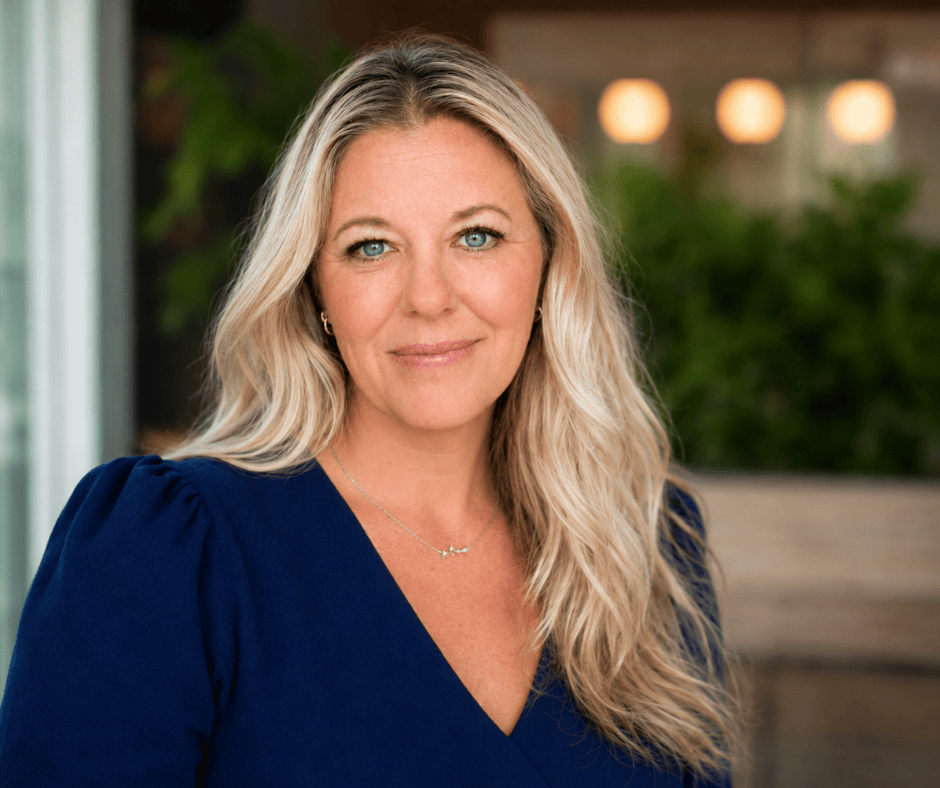
What if your next big business opportunity started with a simple conversation and a microphone? Katie Brinkley joins us to explore how podcasting can help small businesses build relationships, attract new customers, and create valuable marketing content – without a massive audience, expensive equipment, or dreams of becoming the next Joe Rogan.
Building Trust with a Business Podcast
There are plenty of reasons why you shouldn’t start a podcast for your business. No time. Nothing to say. No equipment.
Katie Brinkley, founder of Next Step Social and Podcasting and author of The Social Shift, has heard it all. After producing hundreds of episodes for herself and her clients, she thinks all three are fixable. If you’ve wondered whether a podcast for business is worth the effort, Katie has some thoughts on the matter.
How to Start a Business Podcast: Begin with Your Why
If your plan is to become the next Joe Rogan, this episode probably isn’t for you. Katie works primarily with SMBs with a local footprint that have deep expertise.
Katie says to answer two questions before you hit record: why are you doing this, and who is it for? Your why usually lands in one of three buckets.
- Lead generation: interview prospects and treat the recording like a friendly early sales conversation.
- Networking: use the show as a reason to sit down with people you’d like to know.
- Thought leadership: share what you’re reading, testing, and seeing with your clients.
Katie has run through all three with her own show, and the focus shifted as her business did. That’s allowed. One of her clients doesn’t care about download numbers at all. She wants an hour with each guest because their networks open doors, which is a perfectly good podcast strategy.
You Know More Than You Think
“I have nothing to say” is a common objection. Katie’s answer: “you need to just own the fact that you are an expert in your industry, and you do have something to say.” You’ve forgotten more about your business than your ideal customer will ever know.
That matters for podcast marketing because a podcast puts you in someone’s ear for 20 or 30 minutes, a long runway for building the know, like, and trust that leads to a sale. A social post gets a couple of seconds of someone’s thumb.
Format helps with the “no time” problem, too. Katie finds it hard to talk to herself for long stretches, and she’s not alone. An interview show, or a co-host from your team, is much easier to sustain. My first podcast was a solo show I called the flyte cast. I got six episodes out before I gave up. Switching to interviews fixed that.
Consistency Beats Gear
The equipment question comes up first every time, and Katie’s answer is low-tech. Start with a headset. She has recorded an episode into the voice memo app on her phone, from an airport, just to keep her schedule intact. In her words, “Consistency is going to do better than the best podcast equipment setup that you could buy.”
Here’s the caveat. Katie doesn’t recommend phone recordings as a long-term plan, and neither do I. A decent, basic mic helps. It just shouldn’t be the reason you wait.
What matters more is a schedule you can keep, whether that’s weekly, every other week, or monthly. Think of it like a TV time slot. If your favorite show vanished for a month, you’d find a new favorite, and your listeners will do the same with their commute.
Why a Local Business Podcast May Have an Edge
Katie and I have both gotten guests by attending national conferences and seeking out speakers. If you run a local business, you might feel challenged to find the right guests. Katie disagrees. A local business podcast, built on conversations with other local people, gives search engines and AI tools fresh, relevant content to find. Publish the transcript, put the episodes on YouTube (which Google owns and crawls), and you’ve got podcast SEO working in your favor.
As for guests, Katie says the “closest place to look is probably already inside your building.” A coffee shop can interview its coffee supplier. A chiropractor can talk to the makers of the supplements on the shelf. Chamber of Commerce speaker lists are another good hunting ground, and Katie likes a tool called PodMatch for finding guests further afield.
I co-hosted a show called Fast Forward Maine with the head of marketing at a local bank. We asked who we wanted to be in front of, then invited those people on.
How to Promote a Podcast Where People Already Talk
Katie’s top tactic for promoting a podcast is Reddit, followed by Facebook groups and Substack. Yes, another platform. I hear you.
The approach isn’t “go listen to my latest episode.” It’s showing up with value, answering a question or sharing what you learned, and offering the link to anyone who wants more. Katie says people ask for that link more often than you’d expect. As she puts it, “nobody goes to Instagram to listen to your podcast.” People are in a what’s-in-it-for-me mindset, so lead with the answer.
Her suggestion is to write two short paragraphs by hand, pull out three key points from the episode, and add the link. She also says clients who talk about their shows on Reddit tend to get found more in AI search. I haven’t tested that myself, so treat it as an experiment. And read each community’s rules first, because spammy self-promotion is a quick way to get banned.
You can also repurpose podcast content once you have an interview in the can. Transcripts, blog posts, newsletters, and Substack posts all come from the same conversation. Katie’s math: five guests, one episode every other week, and you’ve got three months of content.
Be the Sponsor of Your Own Show
Podcast lead generation only works if listeners know what to do next. The standard “find us in the show notes” at the end loses people, because many drop off before they get there.
Katie’s fix: “Be the sponsor of your own show.” Drop a 15-second plug into the middle of the episode. Thank your business for sponsoring, say what you do, and get back to the conversation.
Next Steps
- Write your why in one sentence, plus who the show is for.
- Choose a release schedule you can keep for at least three months.
- List five potential guests, starting with suppliers, neighbors, and customers.
- Record your first episode with a basic headset.
- Share three key points and a link in a Reddit or Facebook group where your audience hangs out.
- Add a 15-second sponsor message to the middle of your next episode.
If you’d like help from someone who does this for a living, Katie is at nextstepsocial.com and on LinkedIn, and she hosts Marketing Trends Now.
This post was drafted with AI assistance from my interview then edited and fact-checked by me. Thought you should know.
Transcript From Katie Brinkley’s Episode
Rich Brooks: My guest today is founder and CEO of Next Step Social and Podcasting, best-selling author of The Social Shift, and top 1% podcaster. With a background of broadcasting and digital marketing, she helps business owners build authority, grow their audience, and turn their expertise into meaningful connections through podcasting and strategic content. Today, we’re going to be talking about how a podcast can help grow your business with my friend Katie Brinkley. Katie, welcome back to the podcast.
Katie Brinkley: I love every opportunity I get to sit down with you, Rich, because even though I’m the guest today, I feel like I always learn something from you. So thank you again for inviting me to come back on the show.
Rich Brooks: Always good to see you. For people who maybe haven’t heard of you in the past, how did you get started in podcasting, and what led you to make that one of your business lines where you’re actually helping other entrepreneurs succeed there too?
Katie Brinkley: So I started in radio. That’s what I went to school for. I wanted to be a sports radio journalist, and I’m so fortunate that I actually landed that job straight out of college. I was a post-game reporter for the Broncos and the Rockies and Nuggets here in Denver. And SiriusXM came out, everyone in the radio industry panicked.
I moved into marketing, and I guess the rest is kind of history. 10 years ago when I started my business, my boss at the time said, “Man, Katie, you’re so good at social media. You’re so good at thinking of different ways to present marketing online. It’d be so cool if you could have that be your main job and then if you could find a way to get back into radio.”
And podcasting was that pretty thing that allowed me to get back into radio in some regard. And Next Step Social was born, and we’ve married both of them about five years ago. And I don’t know what took me so long to bring podcasting as part of our offerings into Next Step, but it took me five years to finally say ‘yes’, and it was the best business decision I made.
Rich Brooks: Oh, that’s awesome. Because I have been podcasting for over, I think, 12 years now, and I still haven’t really introduced it to our services, so maybe I still have a lot of things to learn from you.
So somebody’s running a business or listening to this podcast and business is not about creating content, it’s not about selling sponsorships, how can they determine whether a podcast is worth their time?
Katie Brinkley: I think the biggest hurdle that so many business owners have is thinking that they don’t have time, and they don’t have anything to say, and it’s not true. And I think that unfortunately, Joe Rogan has skewed how a lot of people think of podcasting as a four-hour live stream. It doesn’t need to be that way.
And podcasting is one of the best business tools that you can have in your toolkit because it allows you to speak directly to a potential customer. And if someone’s sitting in the car with you for 12 minutes, 30 minutes, that is going to help amplify your know, like, and trust factor with that potential buyer like lightning speed. And I think that’s one of the biggest things is you need to just own the fact that you are an expert in your industry, and you do have something to say.
Rich Brooks: I remember years ago hearing that same advice from the woman who was a book coach helping me write my first book. And so I guess it’s just a different platform, a different channel, but still that idea of you have forgotten more than your ideal customer may ever know about what it is to run your business, a good portion of it is helping clients start or improve their podcast. If somebody hasn’t started a podcast but they’re interested, what are the first few steps that you take them through?
Katie Brinkley: I think understanding the why, right? Why are you having a show, and who is it for? And that’s two very important things to figure out before you ever even hit record, because if “Hey, I want to have this show to make a lot of money and be the next Joe Rogan,” well, might as well just pick the next winning lotto ticket numbers because it’s not that easy.
So knowing what the true ‘why’ is behind your show is extremely important, and who you want to have listening. Do you want to have potential buyers come on the show and interview them and have this be an early sales call? Do you want to have the listeners buy from you? Is this networking?
So my show, I’ve had a number of shows. Rocky Mountain Marketing has sadly gone away. I produced over five hundred episodes for it, and now I just produce Marketing Trends Now, and that is a twofold podcast. I have solo episodes for thought leadership and to share, “Hey, this is what I’m reading. This is what we’re doing for our clients. This is what’s trending in marketing right now.” But I also use it as networking.
So Rich, you’ve been on the show. I’ve had a lot of people that I really respect in the industry come on the show because I want to sit down and talk with them and learn from them. So it is a great networking opportunity. So I think knowing, hey, I want to use this for lead gen, I want to use this for thought leadership, I want to use this to networking with people, knowing the ‘why’ behind your show is going to help keep you motivated to keep producing content.
Rich Brooks: Do you think that most businesses should have an interview style show like this one, or do solo episodes, or just set it up as a solo type thing? Like where do you find the balance? You’ve obviously made a choice where you’re doing a mix, but is there a way for us to know at the beginning that we would be best served by interviewing others versus just getting on our own soapbox and talking each week about our area of interest?
Katie Brinkley: I’ll be honest with you, Rich, and you’ve produced content way longer than I have. It can be hard to talk to yourself, right? It can be hard to talk to yourself for an extended period of time, and that’s honestly one of the things that I have a hard time with now is not monologuing, is making sure that my answers aren’t too long, because I am so used to talking to myself.
But if you’re not used to talking to yourself for an extended period of time, I think that having an interview-based show is the way to go. And it doesn’t need to be, like I said before, with potential buyers. The world is your oyster. You could have it, like I said before, be that lead gen. You could have it be for networking. Or we have some of our clients that actually have a co-host, so it is the business owner and then one person from the team, like the director of marketing, or maybe it’s the COO, it doesn’t matter. It’s somebody else that you can have a conversation with about a certain topic at length.
And so maybe it just starts with you and another coworker where you show up week in and week out and have that conversation based on what’s trending in your industry and stuff that you know that you can talk about.
Rich Brooks: It’s interesting that you say that because Agents of Change was not my first podcast, and my first podcast was something called, The Flyte Cast. I think I got all of six episodes out before I gave up. Because what I found is I was spending an inordinate amount of time perfecting these podcast episodes that were 10 minutes long versus being able to write a blog post.
And this was so long ago. You could write a 400-word blog post, and the next day it was trending number one on Google. That’s how easy it was for writing blogs back then. So I gave up on it before I came back and decided to do the interview-based show like Agents of Change.
Now, you and I are both lucky because we both got involved in the social media game fairly early. We made a lot of connections in the industry. We go to events, and we meet these people who are doing cool presentations, and we’re like, “Hey, come on my podcast and we can talk about this more in depth.”
For somebody who’s not there, somebody who is maybe just working in a local business, but they’ve always wanted to share some of their ideas and their expertise, where might they go and find guests if they’ve not really gone to a bunch of conferences in their industry before?
Katie Brinkley: I actually love this, Rich, and maybe we can workshop an idea together here, because local businesses are different than you and I. We’re online, and like you said, there’s networking events, there’s this, there’s that, where we can go in and we’re used to making those digital connections.
Whereas a local business having a podcast, that actually works phenomenally. And I’m sure you can attest to this, for your SEO and AEO, those local podcasts, because in this world of AI, those are the things that are feeding these machines are those fresh podcast episodes. And if you’re a local business that’s having a local conversation with somebody else locally, you are going to have a lot more opportunity to be found through search.
So how have you seen some of your clients maybe use this? Because I know that for realtors in particular, this has worked really well to have a podcast where they go out to different local businesses and have those conversations.
Rich Brooks: That’s definitely one business model. And to be honest I would say these days, most of my business is local. Flyte New Media, although we have clients all over the country, primarily I would say 75% of our business is local here in Maine. And one of the podcasts that I did run for a while was called Fast Forward Maine. And you were talking about different structures, right? So I had a co-host. We had done this in partnership with a local bank, Machias Savings Bank. The head of marketing over there came, and we co-hosted that podcast.
And the way that we did it is we literally just sat down and said, “Who do we want to be in front of?” And in that case, the theme of the show was how to move Maine businesses forward as quickly as possible, thus Fast Forward Maine. So we basically looked through our local network of people who are already out there talking about things, or just interesting business persons, people we wanted to talk to and bring them on the show for different topics, whether it was topics on marketing or remote work or whatever it would be, leadership issues, and we would bring those people in, and we would work on the podcast. So that may be something worth doing.
Katie Brinkley: Yeah.
Rich Brooks: Whether or not those people are your ideal customers, or like you’re saying with the real estate business, where you’re just trying to connect with the local economy or the local business people where you’re making that connection in front of, you mentioned GEO and SEO, where all of a sudden you’re saying, “I’m here. I’m part of the local business community,” and Google and ChatGPT are picking up on those things.
So that might be one approach. I like how you turned the tables on me and you made me answer a question on my own podcast, by the way.
Katie Brinkley: I told you I always learn something from you, Rich. But that’s the thing. There’s so many different ways of having a podcast, and if you’re a local business, you don’t need to just necessarily go out onto… So there’s a tool called Podmatch. I love Podmatch, and it’s a great way to find guests.
But if you’re a local business, you might not necessarily want to have a guest from four states over. You might want to have the business that’s located next door. You might want to have your coffee supplier. If you’re a coffee shop, maybe you want to have the coffee supplier come on for an interview.
If maybe if you’re a chiropractor and you have supplements at your practice, you want to have each supplement person come on and explain why their product is really good and why you decided to carry it.
The world is your oyster from here. Having those networking opportunities is just a little bit different for a local business, but all of it again, everything that you’re saying, you can turn into… Put the transcript out there. If you’re putting these on YouTube, it’s owned by Google. It’s being crawled, and it’s going to help you be found through search. And I think that for a local business there’s no reason to think that you got to go out and just start getting all these different random people. Closest place to look is probably already inside your building
Rich Brooks: Interesting, yeah. And if you’re a member of the Chamber of Commerce or you just open up online and take a look at any of the, it’s business or not, the local events and who’s speaking and who’s attending are great places to go.
And I’ve heard of somebody who his entire podcast was he would interview prospects and bring them on and just talk about their business, not in a heavy-handed way, but found that building that connection with these prospects gave him the inside track to actually winning their business in the long term. So there’s definitely, not my approach, but that’s a clever approach to finding new ways to generate revenue or generate new business and leads from a podcast.
Katie Brinkley: So it’s no different than being a part of a leads group at your local chamber. And I think that it’s just a different way to expand your network. And when I first started my business, Rich, I think that you and I have talked about this before, but I was like, “Man, who would want to go to a networking event? That sounds terrible. Going and talking about work after work? No, thank you.”
It didn’t take me long to learn that was a very misguided thought process. But having that podcast, it instantly opens more doors because more people are willing to have the conversation with you.
Rich Brooks: Yeah. And to that point, when I used to go to events, we used to go to events like Social Media Marketing World or Social Media Day Lima. If I was introduced, “Rich Brooks, he owns Flyte New Media, an agency in Portland, Maine,” nobody cared. But it’s like, “Rich Brooks, he’s got a podcast,” suddenly every speaker in the room wanted to talk to me.
Katie Brinkley: Yes.
Rich Brooks: Or, “He puts on his own conference,” then everybody wanted to talk to me. “Oh, when is it happening? Are you taking speakers?” All that sort of stuff. So it gives you a leg up on just somebody who wants to do networking. You’re suddenly giving this person their own platform to reach a new audience. So I definitely think that’s one of those benefits of being able to shine a spotlight on somebody if you do have your own podcast.
Katie Brinkley: Yep. I couldn’t agree more. And I think that you asked earlier what are some of the hangups that a business owner might have, and I think that it’s just overthinking it. It’s overthinking the entire process of having a podcast. I’m sure whoever’s listening right now, you would say, “Okay I probably have five people I could bring on my show.” If you produce one episode every other week, that’s three months of content right there with five episodes.
It also is going to help you with, like I said before, transcripts, blogs. You can put it on your website. It’ll help you with your social media. It really is just a content-generating machine, and it’s so easy because we all talk. We all talk to other business owners. We all have conversations. It’s just a matter of hitting record.
Rich Brooks: You have obviously worked with a lot of businesses as they’re considering a podcast or they’re starting a podcast. What are some of the hurdles that they reach? I’m sure that one is the most irritating question, “What equipment should I buy?”
Katie Brinkley: Yep. That’s it, yeah.
Rich Brooks: What are some of the other things that are just stopping people from taking the first steps? What are the basics that you’re helping some people with?
Katie Brinkley: So the equipment question is always the very first one. “I don’t have the equipment for it.” And I have a lot of equipment here, but it’s because this is a core offer of our business.
Rich Brooks: You’ve got hundreds of episodes in at this point. I didn’t start with my Rode Caster either or this board I’ve got to my right. I just basically started with a little headset and that was it.
Katie Brinkley: Yeah. And I think that, don’t overthink it. Really, there’s been times, Rich, and I don’t recommend this for everyone, but consistency is the biggest thing. And more important than a microphone or any other recording equipment is how consistent can you be? If it is once every other week, once a week, once a day, once a month, figure out how consistent you can be. Because you are going to need to train your audience on when they can show up and expect to hear from you.
Once that audience is trained, if you miss a week or two or three or four, you’re already going to be moved down on their priorities. They’re going to go look for someone else to join them in their car ride to work. So pick a consistent release and recording schedule that you know that you can stick to.
For me, like I said, I’ve had over 500 episodes for Rocky Mountain Marketing before I took a break, a little hiatus. But there was times where even in the airport, I was just recording into the voice memo on my phone just to make sure that episode got out. So technology has come a long way. The voice recorder on the phone, it actually isn’t bad. Do I recommend that? No. But if you have to stay consistent, then by all means stay consistent. Consistency is going to do better than the best podcast equipment setup that you could buy.
Rich Brooks: I’m sure this comes down to who your audience is, but how do you help people figure out what the topics or themes of their podcast should be?
Katie Brinkley: It comes back to that ‘why’. Why do you want to have a podcast? Do you want to have it for the thought leadership? Do you want to network with other people in your industry? Again, I’m just going to go back to Marketing Trends Now because it’s really evolved and shifted, and Rocky Mountain Marketing started out as lead gen for me.
During COVID, when I started my podcast, I needed to find some new leads and meet new people, and so I started Rocky Mountain Marketing and was looking up people online that looked like they could use some help with their social media, SEO, all that. So I was like, “Oh, okay this person, come on my show. We’ll talk about your business. What marketing have you found to work? You could use some help with social media. That’s what I do.” And it turned into a lot of clients.
Eventually, I was tired of having the same conversation. We had our books full for client load at the time, and I really wanted to start learning from some people that I really respected in the industry. Like you said, at different conferences I would go up to speakers and I’d say, “I have a podcast. I’d love for you to come on.” I only had two people in the existence of 500 episodes say no, and that’s fine. They have other things going on. That’s okay. I had plenty of other people join me. So I wanted those people to come on so I could learn from them and have that opportunity to speak one-on-one with someone that I just saw speak on stage in front of hundreds of people.
Then it evolved again, and I wanted to have more networking. I was finding that the people that I wanted to have as clients, a lot of the speakers and the people in my network also had as clients, but they didn’t offer what I offered. So again, having those people come on “Hey, you also do…, you help people write a book. Have you ever thought about if your clients had a podcast?” And was making those networking connections like that.
Last but not least, then I decided to move into thought leadership, and that’s where Marketing Trends Now is. I’m already reading and researching and trying new things. What if I just turned the microphone on and said what’s working and what’s not? So that’s where the thought leadership came in.
So that was a really long way of answering your question, Rich, but I think it really comes down to what do you need in your business right now? Do you need more leads? Do you want to expand your network?
One of our clients, she doesn’t care how many downloads she gets. She wants to talk to the guest one-on-one because if she talks to that guest, it opens up a world of opportunities with that guest’s network. So she just wants to network with these people. She honestly doesn’t care how many downloads she gets because she can sit down and have that one-on-one hour-long conversation with somebody in her sphere that’s going to open up so many doors for her.
Rich Brooks: What are the some of the tactics that you recommend to reach that audience? I know you mentioned this one woman who doesn’t care how many downloads she gets, or at least that’s what she says. But most of us would like to reach a wider audience. We don’t have to be the Joe Rogans, we don’t have to be the celebrity podcasters out there, but we need to hit a certain number to make it feel like there’s ROI here. What are some of the tactics you find that are working today to reach new audience members?
Katie Brinkley: You’re going to probably laugh at me, Rich, when I tell you this, but Reddit. Reddit is a great spot to talk about your podcast, and it’s not necessarily, “Hey, go listen to this latest show.” There’s so many opportunities in the right Reddit forums to plug your podcast. They’re in Facebook groups. It sounds crazy, but that is a phenomenal place to go and say, “Hey, I actually talked about Meta’s new Muse AI agent on a recent podcast episode. These are the things I learned. If you want to know more about it, you can listen to the episode. I’m happy to send you the link.”
You would be shocked at the amount of people that ask for that link, and you just showing up and giving value helps tremendously. And you might be sitting there saying “Really? You want me to go on another social platform and plug my podcast? That sounds terrible.” But that is what’s working.
And Rich, you are the SEO guy, so I will defer to you on this. I learned so much from you. I read all the blogs and listened to the show about SEO. But what we have found is people that have podcasts and are talking about their podcast on Reddit help them get found through AI search more.
Rich Brooks: Interesting.
Katie Brinkley: And I think that it’s one of the ways of getting found, getting more downloads. Yes, you can absolutely go and share it on your social media account. But one of the things that I’ve said for years is nobody goes to Instagram to listen to your podcast. And so it’s a what’s-in-it-for-me culture that we’re in now. How can you help me? What’s the answer? And if you already show up with the answer and say, “Hey, actually, if you want the long-winded version of this, I have an entire 10-minute episode where I break it down,” that helps with the downloads tremendously.
And then, there’s other stuff too, like having the right title, having the right description. I’m happy to talk about that too, but if you’re already producing content and you’re not talking about it on Reddit, you’re missing a huge opportunity.
Rich Brooks: So one other thing that I’m interested in is how are you taking the content from the podcast and maybe repurposing it and getting more mileage out of that content?
Katie Brinkley: Yeah, from newsletters to blogs to social content to creating Reddit threads that if you find, and I promise I will get off of Reddit after this, but whether it’s Substack even, if you take your podcast and repurpose it into a Substack. Actually, didn’t you recently speak with Sue B. on Substack?
Rich Brooks: Two people talked about Substack recently on the podcast. Sue B was one of them, and then oh my God, I’m going to embarrass myself because I’m blanking on the other guest who was just on there. This is terrible. But yes, twice recently we talked about Substack on this. First time ever I talked about it and talked about it twice in three weeks.
Katie Brinkley: I hope that they talked about podcasting, promoting your podcast on Substack. Because a lot of people, Jim Fuse, you and I both know Jim, he was at Social Media Week Lima when we both spoke there. He’s gone all in on Substack and promoting his podcast on Substack, and it has done phenomenally for his podcast growth.
So I think that a lot of these smaller kind of community-focused social media platforms like Substack, like Reddit, like Facebook groups, those are a great spot to talk about your show in a non-salesy sleazy way. And if you have two paragraphs that you write by hand, “Hey, have you been checking out Meta’s new AI agent Muse? Some of the things that I found have really been helpful are this, and this.” And just break out the three keys that you talk about in your podcast and then add the podcast to that link. It’s going to really boost your download numbers if downloads are a part of the goal of the podcast strategy.
Rich Brooks: Before I forget, it was Tracy Friedlander. Tracy, if you’re listening to this episode, I apologize that I blanked on your name there for a minute.
Speaking of salesy and not salesy, we’re talking about using a podcast to grow our business. Do you have any tactics for, we’ve got a listener, somebody’s tuned into this show, they’re engaged, do we turn that into actual business? Is there a call to action or approach that would work that would get somebody to finish listening to that episode and reach out to us that you’ve found works for you or your clients?
Katie Brinkley: Well, being the sponsor of your own show is huge. I think that not very many people, as much as I would like to say everyone’s going to stick around to the end of this episode to hear where to get in touch with me and find me, a lot of people are going to fade off. If you can be the sponsor of your show and put in, “Hey, if you’re looking to really elevate your local business, check out flyte new media where we do A, B, and C, and we help local businesses get found on page one,” whatever. That can be a quick 15-second blurb in the middle of your show.
That is going to move people a lot further along down the pipeline than just talking about it at the end saying, “Be sure to like and subscribe, and connect with us. In the show notes, you’ll find the links and all the things.” Be the sponsor of your own show, and if you want to make it super produced in a canned, sponsor segment with background noise and everything, you can do that. Or you can just say, “Hey, really fast, we’re going to take a quick break. Thank you to flyte new media for sponsoring today’s episode with Katie Brinkley. And Katie was a speaker at Agents of Change and dah. At flyte, we do this, and this. All right, so Katie, I want to ask you about this.”
That is a great way to say what it is that you do, how people can work with you, and get that quick plug in there before people fade away.
Rich Brooks: Great advice. Katie, if people are looking for help with their own podcast or to get one started and they want to learn more about you and how you support the podcasters and businesses that podcast out there, where can we send them?
Katie Brinkley: You can go to nextstepsocial.com. You can connect with me on LinkedIn. Those are the two places where it’s best to find me, and you can listen to Marketing Trends Now. Hopefully, Rich, you’ll come back on the show, and I can pick your brain in an episode. But yeah, I think that everyone should have a show regardless of stage fright. Your business deserves to have the microphone
Rich Brooks: Excellent. And I’ll come back anytime you’ll have me. Katie, thanks so much for coming by today.
Katie Brinkley: Thank you for having me.
Show Notes:
Katie Brinkley is the founder and CEO of Next Step Social, where she helps entrepreneurs and small business owners build authority, grow their audiences, and turn their expertise into meaningful business connections through podcasting and strategic content. Be sure to check out her best-selling book, The Social Shift, and tune in to her podcast, Marketing Trends Now.
Rich Brooks is the President of flyte new media, digital agency offering branding, web design, and digital marketing located in Portland, Maine. He is also the founder of the Agents of Change. He’s passionate about helping small businesses grow online and has put his nearly 30 years of experience into the book, The Lead Machine: The Small Business Guide to Digital Marketing.